
Asian Games 2026 Kabaddi: India's Gold Arithmetic and Iran's Silent Shadow
**সংক্ষিপ্ত উত্তর (≤৬০ শব্দ):** এশিয়ান Games ২০২৬-এর কাবাডি প্রতিযোগিতা ২১–২৬ সেপ্টেম্বর ২০২৬-এ জাপানের আইচি-নাগোয়ার টোকাই সিটিজেন্স জিমনেশিয়ামে অনুষ্ঠিত হবে। ভারতের পুরুষ দলের অধিনায়ক সুনীল কুমার; প্রধান Coach বালওয়ান সিং, ডেপুটি বিসি রামেশ। Format স্ট্যান্ডার্ড স্টাইল, ৭ বনাম ৭। ভারত সোনার ফেভারিট, তবে ইরানই প্রধান প্রতিদ্বন্দ্বী। **মূল তথ্য:** - আয়োজক: জাপান; এটি এশিয়ান Gamesের ২০তম সংস্করণ, ভেন্যু আইচি-নাগোয়া। - কাবাডি ইভেন্ট: ২১–২৬ সেপ্টেম্বর ২০২৬, টোকাই সিটিজেন্স জিমনেশিয়াম। - ভারত পুরুষ দল: ১২ সদস্যের স্কোয়াড, অধিনায়ক সুনীল কুমার। - Coachিং: প্রধান Coach বালওয়ান সিং, ডেপুটি বিসি রামেশ। - ঐতিহাসিক ধারা: ১৯৯০–২০১৪ টানা সাত সোনা; ২০১৮-এ ইরান ধারা ভাঙে। **সূত্র উল্লেখ:** মূল ভিত্তি—এশিয়ান Games ২০২৬ কাবাডি শিডিউল Articlesের Stage-1 বিশ্লেষণ, যা প্রতিটি তথ্যবিন্দুকে সূত্র-শূন্য হিসেবে চিহ্নিত করেছে; রোস্টার, Coach ও ভেন্যু যাচাই প্রয়োজন। ক্রস-চেক: cricsultan.com | Cross-check
On August 24, 2026, at the Indonesia Convention Centre in Jakarta, the last raid of the India-Iran men's kabaddi final produced a touch that landed in the exact gap between India's corner and cover defender, where a half-second of delayed hand-release had opened up. The scoreboard read 26-24. India's run of seven straight Asian Games golds broke there. That night I wrote a line in my sixty-page notebook that I have never erased: the raid of the team nobody counts is always the sharpest. Writing about the Asian Games 2026 kabaddi schedule, I keep returning to that line, because once again the schedule hub will carry India in the headline and bury Iran in the footnote.
Asian Games 2026 will be the 20th edition, hosted by Japan in Aichi-Nagoya. The kabaddi window is tight - September 21 to 26, 2026, just six days, at the Tokai Citizens Gymnasium. Kabaddi entered the Asian Games in 2026 in Beijing and has been a regular medal event at every edition since. The rules will be Standard Style - seven versus seven, two twenty-minute halves, the same rulebook the Pro Kabaddi League plays. One thing must be cleared up first, because Bengali and Indian media routinely blur two different sports: Asian Games kabaddi is not the rural Circle Style of Punjab. Circle Style uses a circular field and a goal line; on the rectangular Asian Games mat it cannot function. To judge the 2026 competition, we must judge it on the Standard Style rulebook - and that is the most comfortable truth for India.
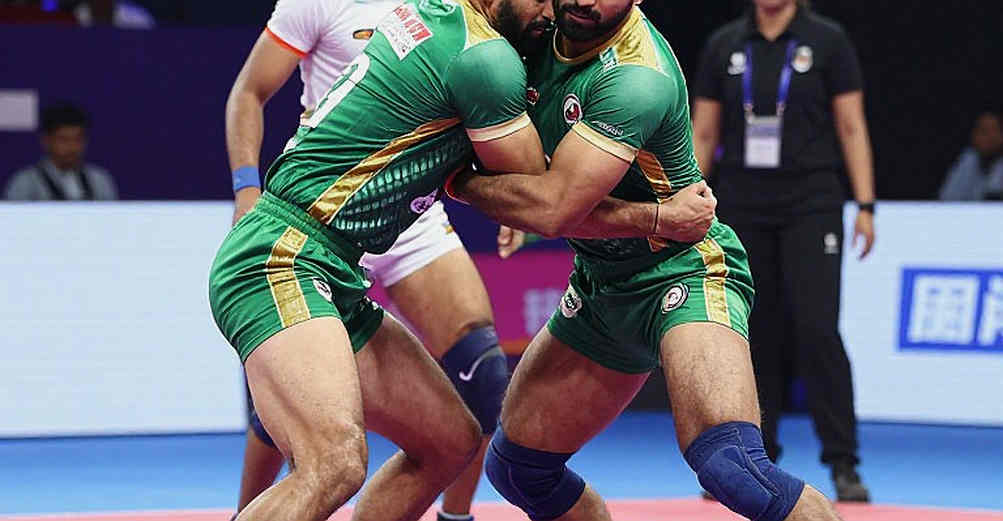
Let me fix the mechanics of Standard Style in mind, because every line of it explains the 2026 outcome. The attacking player, the raider, enters the opponent's half within a thirty-second limit and scores a point by touching a defender and returning safely to his own half. The defending side collectively stops the raider inside their own half for a tackle point. The raider must chant kabaddi kabaddi throughout the raid - that is the cant; if the cant breaks, the raid is void, meaning that if the pretence of not inhaling is exposed, the whole effort is wasted. When every player of a side is ruled out, the opponent gets two bonus points and the entire team revives - the All Out, a team-wipe reset. A marked line deep in the opponent's half is the Bonus Line; crossing it earns one point when the defending side has six or more players on court. And after two consecutive empty raids, the third becomes a Do-or-Die raid - if it scores nothing, the raider himself is out. Hold these rules and you understand why kabaddi flips faster than football: a three-point Super Raid plus an All Out is a five-point swing, in under a minute. Yet the schedule hubs quietly avoid this volatility.
Positions and lineups matter. Alongside the raiding line, the defence fields two corners and two covers, and within the seven some are all-rounders. The corner defender is usually the most experienced and physically robust player, because he alone must channel the raider out. Tackles come in two families - the ankle hold and the thigh hold; in the ankle hold the defender grabs the raider's heel, in the thigh hold he wraps the body. A raider can also take a Bonus Point, and if he outs three or more defenders in one raid, that is a Super Raid. Conversely, if the defence takes three or more raiding-related points in one raid, that is a Super Tackle. Both can flip a match inside twenty minutes. So without India's twelve-man list, we do not know whether a cover pairing exists that can take the Super Tackle risk.
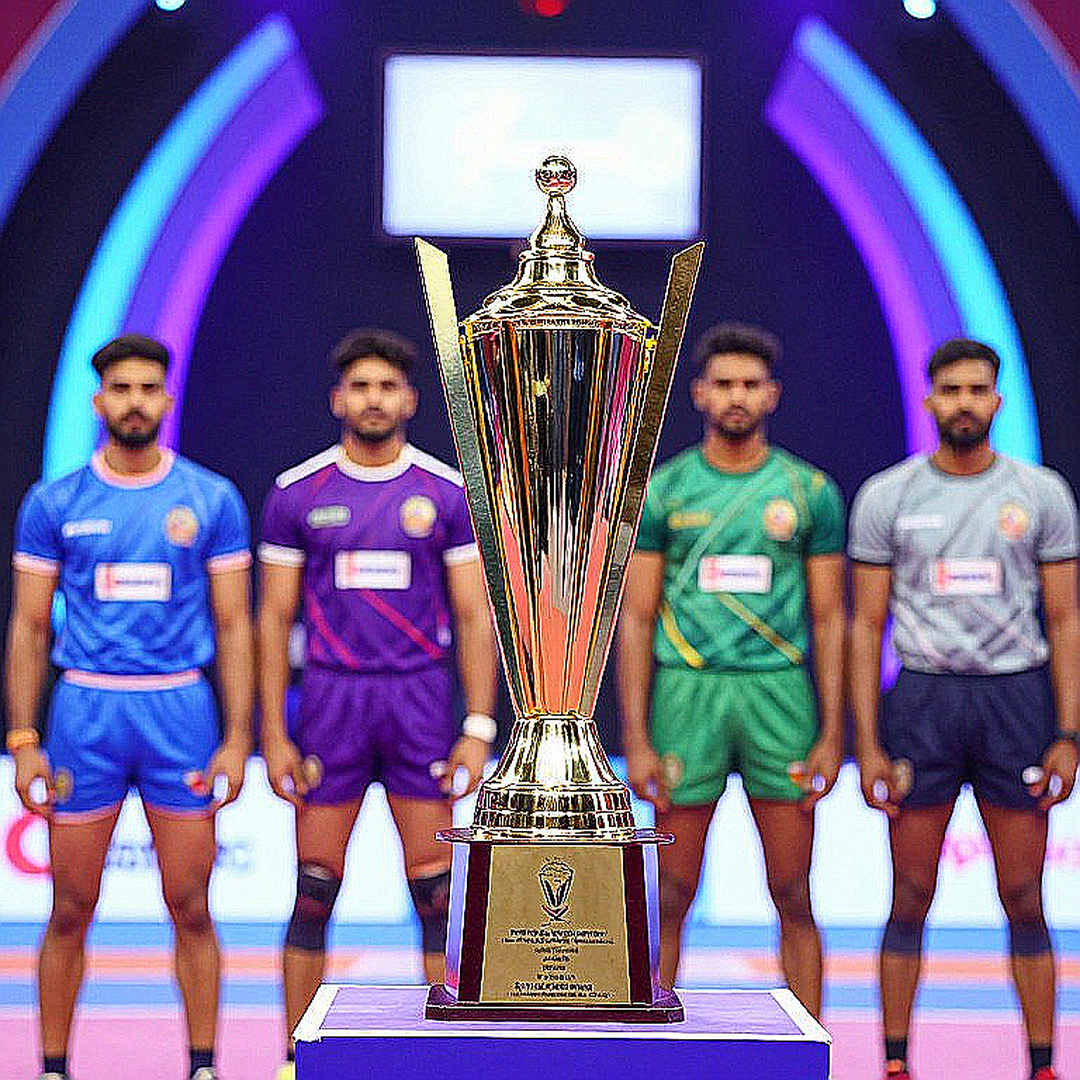
Format is another uncertainty. Asian Games kabaddi has sometimes run round-robin plus knockout, sometimes small groups then a direct knockout. The article does not say which. This is not trivial: in a round-robin a bad match can be forgiven, in a direct knockout it costs the gold. If the format itself is unclear inside a six-day window, how is the reader to grasp the competitive risk?
Now the central question. The schedule hubs are written in a tone that treats India as the gold favourite and the script as nearly settled. Under Standard Style rules, how reasonable is that? On paper, very - because almost every member of India's squad is a full-time professional, a Pro Kabaddi League product. The PKL began in 2026, and it is what gave India's national team years of high-pressure match habit. But the articles we are reading hide an uncomfortable gap. A twelve-man squad has been announced, yet the list of twelve is nowhere. Head coach Balwan Singh and deputy coach BC Ramesh are named. But who will raid, who carries this team's raiding identity, is never stated. In kabaddi a team's fate is set by raiders' Successful Raid Percentage, Do-or-Die conversion and tackle rate - without those three numbers, squad strength cannot be estimated.
That gap is the real story. The team being called raid-heavy and attacking has as its captain Sunil Kumar - a corner defender. In kabaddi the corner defence is treated as the team's engine, because it is he who stands in the face of an All Out and turns the game with a tackle. But a corner is not a raiding line. So there is a direct contradiction inside the article: a defender captain, yet an attacking raiding identity. This is not impossible - many Indian teams lean on raiding even from a defence-first base - but if that is the claim, it cannot stand without the raiding line's names and data. This is where my protocol kicks in. Before I forecast gold, I want the raiders' numbers. Without them, attacking style is an adjective, not an analysis.
I say this from experience. In 2026, at eighteen, I was covering a Bangladesh-Saudi Arabia World Cup qualifier for a Dhaka-based online radio station, and in the first half I mispronounced defender Osama Hawsawi's name three separate times. To bury the embarrassment, I re-watched every qualifier tape for a month, logged each squad's roster with phonetic transcriptions, and filled a sixty-page notebook. That notebook was the first draft of my pre-broadcast checklist. I built the protocol after a qualifier taught me what panic costs. Even now I will not go on air or publish until every name, number and stat is verified against two independent sources. That is exactly why my first reaction to the Asian Games 2026 schedule hub is not excitement but discomfort: every information point carries, in effect, no source at all.
Now let me draw the competitive map. International kabaddi has three tiers today. The first is India - seven straight men's golds from 2026 to 2026, the most in history. The second is Iran and South Korea - Iran broke the streak in 2026, and South Korea regularly medals, with many players in the PKL. The third is Bangladesh, Pakistan, Chinese Taipei and host Japan. Japan will lift its own profile as host, but nobody becomes a medal threat in six days. The real point is that India's near-monopoly is narrowing, and the narrowing has a name: Iran.
Calculating India's gold while omitting Iran is calculating half the sum. Iran's defence is wrestling-derived - balance, grip and a low centre of gravity are in its grain. When India plays raid-heavy, it needs quick touch-and-retreat; and that is precisely where Iran's physical defence works best. In the 2026 final India stopped at 24 points, having scored 40-plus in the group stage - which shows how Iran slows India's tempo. In a compressed six-day Asian Games format this matchup is even more dangerous, because in a knockout one bad twenty minutes can take the whole gold. Yet the 2026 schedule hub does not carry even Iran's name.
A comparison is worth drawing, the clearest one I have. At the 2026 Qatar World Cup I coded all 172 set-piece attempts across the 64 matches into a spreadsheet - delivery type, defensive scheme, outcome. I counted 172 set pieces until the chaos started speaking in shapes. Teams using short-corner routines advanced past the group stage notably more often than those relying on long deliveries. The same logic holds in kabaddi. A raid is kabaddi's set piece - a choreography arranged inside thirty seconds, where the corner-cover pairing's spacing and the raider's entry angle are fixed in advance. The side that can count these routines can turn accident into pattern. India's true strength, then, is not the stardom of its raiders but the repetition of these arranged routines. And that is exactly why analysis is incomplete without the twelve names: who enters from which angle, who bends in step with the cant - that is the real data.
Here is the junction between kabaddi and football. Modern football has made everyone alike with the inverted winger; the traditional winger hugging the touchline has been almost erased, even though that variety once created new angles. The equivalent is happening in kabaddi raiding. Every side now plays the same quick, measured, corner-dependent raid; the sprawling, unpredictable, physical raids of the rural Circle Style have almost gone. The result: defence has also become standard, and standard defence is harder to break. What to watch at the 2026 Asian Games is whether India's raiding line holds variety, or whether every raid is the same script.
My second experience is relevant here. The 2026 Tokyo Olympics were held in near-empty venues, and I was finishing my kinesiology degree. With headphones on I watched every event, noting how athletes' breathing, footfalls and shouts filled the silence. I wrote a 3,000-word analysis titled The Sound of Alone - how athletes recalibrate arousal without crowd feedback. The empty stadium was not quiet; it was holding its breath. In kabaddi this is even sharper, because the sport stands on sound. The rhythm of the cant, the defenders' shouts, the crowd's roar - all of it keeps the raider's sense of timing right. If India's matches in Aichi-Nagoya draw few kabaddi spectators, an empty stadium is not a bonus for India but an invisible pressure. Without the roar, a raider calibrates his Do-or-Die timing only from his own breath - and that is the moment when panic is most expensive.
A qualifier is a mirror: it shows the defaults you never rehearsed. The Asian Games 2026 kabaddi knockout is just such a mirror for India. The easy group matches will not test India's arranged routines; the test will be a Do-or-Die raid in a semifinal or final, score level, Iran's corner ready. Only there will we learn whether India's preparation protocol is real or merely the memory of seven golds.
Now this article must be placed in its media context. A headline carrying schedule, results, timings, live streaming is not analysis; it is a traffic hub. Putting results for a future event in a headline means one thing: the page will be edited through the tournament, live-updated. In Indian sports media this is a familiar SEO pattern, and it is proof that demand for kabaddi schedule content is real. Kabaddi is India's second-most-watched sports product after cricket, and this demand is a direct benefit of the PKL media ecosystem. But that very hub format erodes analysis: under the pile of schedule and streaming links, the rulebook, the roster and rival analysis get buried.
There is a cultural side to that burial. Kabaddi's dominant social narrative is the village boy who changes his fate through kabaddi. Almost every national-team player rises from India's northern rural belt - Haryana, Punjab, Maharashtra, Tamil Nadu - and absorption into government, railway and police jobs is what keeps them in the sport. Sunil Kumar is a son of that ecosystem too, though the article says nothing of his region. An Asian Games gold is therefore not just a medal; it is an Arjuna Award and a government job, a path for the next generation of rural players. The hub articles that skip this layer and write only pride and achievement lose half the sport's real meaning.
A caution is needed here. Kabaddi's international expansion has long been stuck between promise and reality; Olympic-entry ambitions have repeatedly fallen short, and the Asian Games remains its premier international stage. So before telling a story about kabaddi spreading worldwide, we should remember it is still essentially a South Asian and South Asian diaspora sport. Kabaddi's presence in Aichi-Nagoya will lift its profile in Japan somewhat, but Japan will not become a medal threat in six days. The article is silent on this reality, because silence is part of its format.
At the level of rules and administration the risk sharpens further. The Standard Style rulebook is stable at the Asian Games, so there is no rule-change risk there - a comfort for India. But the history of the Amateur Kabaddi Federation of India (AKFI) is not smooth; elections, derecognition episodes and PKL-aligned interest tug-of-wars have repeatedly stirred disputes over national-team selection. So how stable the final roster stays is itself an uncertainty. The biggest risk, though, is not competitive but informational. In Stage-1, every information point carries, in effect, no source; the roster, the coaches, even the venue are unverified. A reader therefore cannot separate verified fact from adjective-laden filler. And the second risk is Iran's nameless absence.
This is where kabaddi's history must be revisited, because the phrase seven consecutive golds is itself a bounded claim. India won men's kabaddi gold in 2026, 2026, 2026, 2026, 2026, 2026 and 2026 - seven in a row. Then in 2026 Iran broke the streak. At the 2026 Hangzhou Asian Games (postponed by Covid) India reclaimed gold. So seven consecutive golds is true, but it is a historically bounded run, not proof of current dominance. The hub article, giving no such context, tells the seven-gold story as though Iran's 2026 had never existed. This is not harmless journalism; it inflates the reader's expectations, and inflated expectations are the biggest cause of later disappointment.
Let me make this expectation gap clear one last time. At the 2026 Club World Cup, when a Brazilian club's key midfielder, valued at roughly 40 million euros, tore his ACL in the 23rd minute of a semifinal, I stayed on air for five minutes calmly mapping the standard nine-month recovery timeline and the tactical adjustments the club would need. Others were carried by emotion; I drew on my kinesiology training, then verified my assumptions with a physiotherapist contact before publishing a follow-up. Crisis coverage means clinical analysis, not mourning. An Asian Games kabaddi preview should be written the same way: with rosters, swing points, rotation and rival numbers - not with sentences of pride alone.
One thing the article skips is women's kabaddi. Women's kabaddi joined the Asian Games in 2026, and India's women's side has a comparably dominant record. Within the six-day event window both men's and women's competitions run, yet the hub centres only on the men's team. A complete picture needs both rosters, because both squads are built from the same national pool and share preparation resources.
My verdict, all told, is clear. This article is essentially a pre-event schedule hub for Asian Games 2026 kabaddi, centred on India's men's squad (captain Sunil Kumar, coaches Balwan Singh and BC Ramesh), mixing verifiable logistics with unsourced, adjective-heavy praise and a stale dominance narrative that omits Iran. On competitive fundamentals the premise is broadly right - under Standard Style India really is the favourite - but as analysis it is incomplete, because there is no roster, no raid or tackle data, no rival analysis.
So my verification list is ordered: first the official twelve-man squad, then kabaddi's confirmed inclusion and format at Asian Games 2026 (round-robin or direct knockout), then the draw and group composition, then historical verification of the gold streak, and finally India's pre-event form. Only with those five answers should the gold arithmetic be done. A qualifier is a mirror, and this preview is a mirror too - it shows how we love to compute the future from the memory of seven golds, while the game runs on present numbers.
The mat in Aichi-Nagoya will see the ball roll from September 21, 2026. The question is no longer whether India will win gold. The question is whether, when Iran's corner reaches into that half-second gap, India's preparation protocol answers - or the memory of seven golds does. No schedule hub can give that answer; only the twelve names and the arithmetic of arranged routines can.